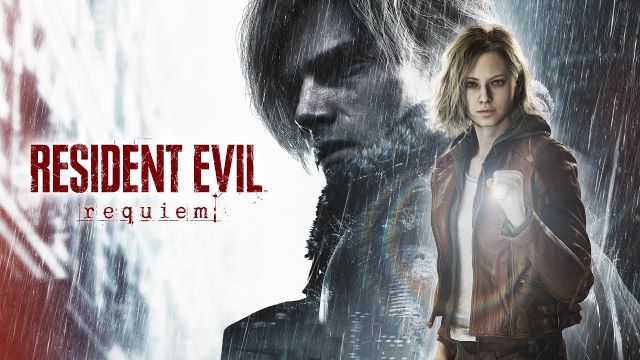
Resident Evil Requiem (2026) is the Resident Evil franchise at its absolute best. Taking elements of the horror and suspense that gave first games of the series teeth and blending it with the bombastic, over-the-top action sequences of later installments via two separate playable characters provides the player with a unique, multi-faceted experience that not only feels great to play, but like a refreshing balance of everything that makes the franchise so outstanding. The return and continuation of Leon Kennedy and Sherry's story with the introduction of Grace Ashcroft as a new protagonist in the series feels like long-awaited pay off with a new flavor.
The gameplay of Requiem feels like such a love letter to the action/survival horror genre, and story offers closure for the T-Virus, Raccoon City, and Umbrella's bioweapon experiments beneath the destroyed city. It was genuinely hard for me to find something I disliked about my time with the game, and I'll delve into that later on. If you've made it this far without playing/watching the game for yourself, I highly recommend closing this article and going to check it out if you have the means to. From here on out SPOILERS AHEAD.
An important disclaimer should be noted here, I opted to play Grace in third-person over the recommended first-person experience. Much of her gameplay and chapters are designed to be experienced in first-person. I don't personally think this choice diminishes the experience, but it is something to consider.
I'm starting with a fairly comprehensive game overview which will summarize the entire game along with some of my commentary. If you'd like to read my thoughts on specific things, scroll on by and check the orange headers at the top of each section.Requiem brings the Resident Evil timeline up to the current year, 2026, and with it, we see how the world has changed in the wake of not just Raccoon City's destruction, but the lingering influence of the "defunct" Umbrella Corporation. We start the game with Grace Ashcroft, meeting her in her cubicle as she chips away on her 9 to 5 as a technical analyst for the FBI. A far cry from the rustic and rural settings of the last two games. Though the office is bustling, there's an underlying sense of intrigue and mystery, as Grace is tasked with investigating the mysterious deaths and disappearances occurring at the Wrenwood Hotel. We learn she has history with the location (conflict of interest who?) and because of that, her boss sends her into the field to gather evidence.
The Wrenwood Hotel, though situated within a busy, modern city, has been abandoned for years after the murders that took place. The deeper the player wanders, the darker the shadows, the tension mounts, and comes with gnashing teeth, forcing Grace to fight for her life for the first time. As a staging ground and introduction for the tone of the game from Grace's perspective, the Wrenwood Hotel is a masterclass.
Leon's first chapter comes in the same city, in pursuit of Victor Gideon, who has now kidnapped Grace. To cover his escape, Gideon shoots a number of civilians with a dart gun, infecting them with the T-Virus, and kicking off a small scale apocalypse that instantly consumes the city blocks. Leon must fight his way through the growing horde to give chase, and this section, while short, works beautifully to introduce players to the combat mechanics of the game. Leon in RE6 felt like a smooth operator, much more combat proficient than the police rookie we first came to love, but in Requiem, he feels like a machine in the best way. As the rain beats down on his sleek coat, sirens and lights strobe, and the pulsing synths churn in the score, it's easy to forget this is only the combat tutorial. We watch the city fall into chaos in real time as panicked crowds shove by us, running from zombies. Explosions and fires break out as cars crash, all while we're hacking, blasting, and dodging our way through the maze.
When we catch up with Grace, she's been taken to the Rhodes Hill Chronic Care Center, a medical facility dedicated to providing long-term care to patients with complicated chronic conditions. On the surface, like many Resident Evil facilities, it seems tame and true to its facade. There is a darkness, unsurprisingly, within the center, and right away, we feel it. The clean rooms and halls, empty and silent, become a new maze for Grace, alone and defenseless against whatever lurks just out of sight. As we explore, we find a room meant for children, and an ominous storybook on the table foreshadows the arrival of the creature from the trailers: The Girl. Her introduction in the narrow halls, the tight rooms, create the perfect atmosphere of urgency and panic that can feel suffocating. Though we outmanuever The Girl here, in the end, she catches us regardless, which transitions us right back to Leon.
Leon walks in through the front door of Rhodes Hill, apparently expected, and is given something of a tour on the way to wait to be seen. Like the player, he's suspicious of the facility, and even distrustful of the nurse who escorts him. It isn't long until an alarm sounds and chaos descends. The first zombie we encounter in the care center is a chainsaw (where did he find that?) wielding doctor who swiftly eviscerates the nurse in front of us. And I can't help but wonder if the nurse was a blonde woman if Leon would have saved her. Suddenly those clean, neatly-furnished rooms are far too crowded, and navigating around the furniture while fighting off the horde feels tight. Once we've dispatched them, however, we catch up with Grace, just in time to temporarily down The Girl before she has a chance to drag Grace off into the dark. We send Grace on her way with Requiem (12.7x55mm ftw), and deal with Gideon in the darkness, who rather quickly chokes Leon out.
Swapping back to Grace, with one bullet in the Requiem's cylinder, the care center opens up. Now, our objective is clear: escape. This is where the game really opens up and steps into the shoes of its predecessors. The care center is vast with multiple floors and two distinctive wings with various enemies, puzzles, and environments. Grace must carefully navigate to find resources and the crystal cubes that slot into the main door to unlock it. There are three in total, each one held by a different administrator, and in order to find them all, we've got a lot of running around to do. This is really where the gameplay differences between Leon and Grace become obvious. Grace works with whatever resources she can find, scavenging medical supplies, bullets, and bottles to use as distractions to move the packs of zombies around. Grace must take a more stealthy, considerate approach to how she engages with the environment, whereas Leon can mag-dump his way through any problem he runs into. It's a difference of preparedness, and while it does take some getting used to, it doesn't feel frustrating or punishing.
Grace's escape becomes much more complicated as she meets Emily, a little girl held in a secure room located off the guard station, who has clearly been experimented on by Gideon and his team. She's blind, a side effect of these experiments. Suddenly, escaping isn't just about Grace, but Emily too. I was skeptical of this narrative choice, not just because the idea of dragging a little girl around a zombie-infested medical center is tedious, but because I thought encumbering Grace's character--already traumatized by the murder of her own mother--would reduce her character to the general "woman suddenly becomes inept because the desire to be a mom is overwhelming" trope. And while that does happen to an extent, it isn't so egregiously offensive that it completely strips her character of agency.
Here's where things get more interesting, though. At this point in the story, the zombies are mutating, becoming much more agile, aggressive, and hardy. The halls and rooms of the care center haven't opened up at all, and fighting the blister heads in the tight spaces is an exercise in resource management. Choosing how to approach each encounter in this section, knowing which fights to take and which to avoid, is critical. This section of the game is definitely the longest because of this. There are moments where you can complicate processes much more if you aren't careful, something I learned the hard way. And while the crafting system, introduced in this chapter, is very helpful, resources are still sparse. Progression here can feel slow, especially if you plan on taking your time to explore and search for every item and lore note, which is generally how I play these games. But, despite this, it doesn't overstay its welcome.
When we catch up with Leon, he's being rather intimately interrogated by Gideon. I'm sure you've seen clips of that scene floating around, some weird edits set to slowed + reverb music, you know the sort. It's fanservice. I didn't hate it. He escapes, and now he's loose in the care center searching for information and his next lead. Whatever zombies Grace couldn't dispatch are nothing to Leon, and cleaning up the halls takes mere minutes. We get confirmation in this chapter that Leon and Sherry, who has been providing Leon with overwatch (the gal in the chair, as it were) are both infected with the T-Virus, and it's reaching the critical stage 3. We're on the clock, not just to stop Gideon and Umbrella, but to save ourselves.
There's a fairly tense section somewhere, but I don't remember exactly where it places in the order of events. The Girl returns and claims Emily, taking her from Grace into the basement of Rhodes Hill. We give chase, jumping into a hole, and are met by even tighter corridors with no lights, and cells full of infected. Grace must navigate through the dark to locate three power cells to slot into a console that will allow her to unlock the door to Emily's cell. The Girl is weak to UV light, and we must strategically use that to our advantage to keep her from killing us while we go about this task. Honestly, this entire section was pretty uninspired for me personally, and really just felt tedious. The underground serves as the disposal area for test subjects, and the scares provided are pretty cliche. "Dead" zombies on assembly lines suddenly grabbing us, a giant meat grinder, you know, standard fare. This was my least favorite section in the entire game, but breezing through it really isn't a problem. The climax for this section is a tense escape into an elevator that is seiged by The Girl, and there's a QTE to open the door and disembark with Emily before she kills us. Doing this successfully rids us of The Girl for a little while.
Escaping Rhodes Hill with Emily and Grace, we meet a man with an infamous "Resident Evil Helicopter", the key of which we must press on alone to secure. Searching for the key leads Grace into an office, which is actually an elevator, that descends down into a portion of the Umbrella research lab beneath the care center. And I have to say, Umbrella has really nailed the stark-white LED lit aesthetic for their evil labratories. I can't imagine what the power bill must look like. Down here, we discover more information about Gideon's intentions, and find the helicopter key. Of course, as Gideon monologues about Ozwell Spencer's glorious new world and his work, and his succession, Grace is tucked behind a containment tube eavesdropping. When he's done with this somewhat masturbatory speech, he initiates the self-destruct sequence of the lab. Now, we've gotta bail before the ceiling comes crashing down, all while the mutated test subjects escape their containment and try to kill us. Thankfully, there are handy disposal canisters scattered throughout this level that provide us with an aerosolized agent that instantly dispatches the infected. Moving between these canisters while working your way to the stairs is the trick to making it here, as it's easy to get overwhelmed and surrounded by the blister heads if you stop moving.
Back outside, we strap into the helicopter, which of course, crashes soon after take off thanks to the horde of zombies emerging from the destructing lab and the care center. Our pilot friend, unsurprisingly, doesn't make it. Emily is wounded in the crash, as well, and scooping her up to escape the chopper before it inevitably explodes, Grace takes off on foot to find shelter.
Having heard the commotion, Leon, now outside on the roof, takes position to provide cover for Grace as she makes her way to the church nearby. It's a nice sniping section, where your accuracy and speed in dispatching zombies is crucial to Grace and Emily's survival--and your ability to avoid a GAME OVER screen. After holding the horde off long enough for Grace to make it inside the church, Leon hits the ground to follow, and catches up with the pair. But the church isn't safe, of course, there are still zombies coming, and Leon volunteers to stay behind to cut them down so the girls can escape. This is another sequence of stylish ass-kicking, but one that introduces a new zombie type that is able to instantly mutate regular zombies into blister heads when the pustules on its body are destroyed. Explosives are great here. Shoutout to the propane guy, who always placed a tank exactly where I needed one.
Escaping into the underground with Emily wounded, Grace must find a way out, all while The Girl makes a grand return. But at this point, driven by the desire to protect Emily, Grace cooks up a plan to be rid of The Girl permanently. This section does what the disposal section tried to do, but far better, in my opinion. The Girl is the only enemy present, and though we're stuck in darkness, we have both Requiem and UV lamps scattered around the block to help keep her back. Successfully reconnecting the power to the control console (three switches in three different areas, of course!) allows us to open the hatch overhead, letting in the sunlight which instantly fries The Girl and melts her to sludge. Having done that, we return to Emily to find she has succumbed to her wounds. But, being infected, she doesn't stay dead for long. Instead, she mutates into a monstrosity that Grace attempts to reason with. Leon intervenes, putting Emily down, all while Grace pleads with him to stop hurting her, unable to see the truth.
With Emily gone, Grace leaves Leon behind, in shock at what's happened. She catches up with Gideon and meets a new figure, Zeno, both of whom explain to her that she is the key to continuing Spencer's work. She goes with them, having lost hope in the face of the tremendous shock of Emily's death.
Though Leon's condition is worsening, he gives chase, and here we finally arrive in Raccoon City. Raccoon City, destroyed by the missile strikes at the end of RE3, is a desolate wasteland. But you and I know there's a big secret Umbrella Corp. lab underground there somewhere. We've just gotta help Leon find it. This section is more of the "find three things to make one thing to open a door." Leon scours the ruins of the city, piecing together a detonator from the remnants of a slain BSAA presence that was dispatched to the city, and once we get the gate open, the most ridiculous action sequence of the game kicks off. Motorcycles, rocket launchers, zombie dogs, drive bys, insane stunts, corny one-liners, it's all there. It's glorious, it's over-the-top, and it is so unapologetically Resident Evil that I couldn't help but love it. The game is self-aware, and it leans into this awareness to deliver a hilarious sequence with this section that really just cements Leon S. Kennedy as an absolute action hero. But as the high of this insanity wanes, Raccoon City Police Department awaits.
I'm so glad that I played RE2 recently, because I was able to enjoy the emotionality of RPD and Leon's connection fully. Scouring the station, Leon reminisces on his time there, and how it is where all of this started for him. His character development really emerges here, as he resolves himself to atone for his failures of the past. He carries the guilt of what happened to Raccoon City and feels like he should have done more. This comes to a head when our old Tyrant friend, 'Mr. X' appears, chasing us through the ruined station and into a climatic boss fight that sees a now older, wiser Leon come out on top. Having gotten our lead on the whereabouts of the secret underground lab, we set out, hoping not just to find Grace, but a cure, and put an end to all of this.
Inside that very facility, the ARK, Grace learns of Umbrella's experiments from Zeno. She learns about the little girls from the experiments, the girls like Emily. This triggers a chapter of gameplay where players take the role of Chloe, a little girl involved in these experiments back in 1990. Chloe is one of many genetically-engineered clones produced in an effort to transfer Ozwell Spencer's memories via his plasma into a new body, thus enabling the corporation to continue his research. But, something is very wrong with the other girls, as they've gone rogue with mutant strains of the T-Virus, and are killing the researchers. Chloe is seemingly unaffected by this mutation, at least at the present time players are controlling her. This section is short and relies on stealth. Chloe must avoid the roaming pack of freaky mutated girls to escape the orphanage. This ends with her reaching the actual research lab, discovering the truth, and being sedated by a researcher who states despairingly that she's showing symptoms and must be destroyed, too.
After Leon arrives at ARK, he sets about tracking down not just Grace, but again, finding answers. But ARK isn't the abandoned labratory he was hoping for, Umbrella's elite soldiers patrol the halls in tactical packs, eager to gun the intruder down. The introduction of these soldiers definitely changed up the gameplay, forcing me to rethink my approach to combat. Getting spotted basically guarantees death, so relying on cover and picking the soldiers off one at a time becomes key. Further, fully using the environment is also a great help. I took great pleasure in setting a Licker loose on a squad and watching it tear them apart while I snuck around behind the shield-toting soldiers to blast them with my shotgun. There's a one-on-one fight that comes after with one of these elite soldiers, the commander, who many fans speculate is HUNK or at least a clone of him, because the voice actor is the same. We get no confirmation of this, but this fight is essentially Krauser 2.0, in my opinion. Close range, reliant on melee, and parrying his melee attacks. It's flashy, it's quick, and it feels incredibly satisfying to play. Like the squads of elite soldiers, the commander requires a change of approach to successfully put down, as he's deadly with his hatchet and karambit combo.
Back with Grace, she's poised with Zeno at the center of Ark, in front of a console where he expects her to have the password to release "Elpis", the project that he and Gideon believes will finalize Spencer's work and ensure Umbrella's bioterroristic grip on the world. He reveals that all she needs to do is enter the correct password, but the wrong one will destroy Elpis so... no pressure. Though Grace explains she doesn't know what the password is, Zeno insists that she must because she is the key. Before he can get too in his feelings about it though, Leon rolls up and escapes with Grace. Reunited, the pair tumble down into the bowels of the facility, where Leon's condition reaches an all-time low. Eventually, Grace moves on ahead to open a path for him, but on her own again, she has to face a legion of Lickers. Stealth makes dealing with them easy, as to be expected. Despite duck-walking everywhere, I was able to breeze through this section quickly. It culminates with Grace reaching a huge console in the archives with dozens of screens, panels, and a slot that reads drives... the same kind of drive that Grace's mother stashed at Wrenwood the night she was murdered. The same drive Grace recovered in the opening when she returned to Wrenwood. Popping it in, we discover that Alyssa, Grace's mom, had recorded an interview with Ozwell Spencer before he died. In it, he expressed a deep regret for what he had done, stating that he lost the plot and had gone too far.
With the path open, Leon must move ahead to find the heart of ARK and shut it down. At this point, he's suffering immensely from the late stages of his infection and will regularly have bouts of bloody coughing, dizziness, and weakness. The Lickers and zombies don't care though. Fighting our way through them, we take the elevator up to the heart of ARK, but before we can reach it, the infection takes hold.
Grace discovers the truth of her existence and role in everything on the drive that her mother stashed. She was an orphan that was adopted by Spencer, never experimented on, that he had taken in simply because he wanted to atone for the wrong he had done to the world. She, he expressed to Alyssa, was his hope for the world. A gift to undo what he had done. Having learned this, Grace understands that she is the key to putting an end to this. That Elpis isn't a weapon to control the world like Gideon and Zeno think, but it's actually a cure, an antiviral for the T-Virus. On the monitors, she spots Leon, incapacitated against the door nearby, and rushes to help him.
The two return to the heart of ARK and confront Zeno, again, who is still waiting for Grace to enter the password to unleash Elpis. Grace promises him she will comply with his wishes, but only if he allows Leon to live. He agrees. The player, in Grace's shoes, is presented with a choice at the console: destroy Elpis, or release it. The choice depends on the answer we enter on the console, the "password" needed to determine the fate of the world. "What does the creator desire?" Given everything we know, we know Spencer--the creator in this case--wants hope, he wants to undo the wrongs he's done. So, I chose to release Elpis. Grace types her answer. What does the creator desire? Hope. After a moment, the console whirs and from the central chamber, an array of injectors emerge. Zeno, ecstatic at the result, grabs one and monologues about his ascension to true power. He injects himself, proclaiming that Grace and Leon will be the first to witness his glory. And right away, the discolored scars on his face from the T-Virus infection recede. His mutated eyes return to normal. Elpis is a cure, he has been cured. Grace, seeing this, grabs an injector and rushes to Leon's side.
And here's where Victor Gideon makes his return, looking pretty decent for a guy who exploded in a motorcycle crash after falling like two hundred feet--only an arm is missing. As Zeno starts a diatribe, Gideon proclaims the genius of his master (Spencer) in creating Elpis. If Umbrella has created a world controlled by bioweapons, a cure is even more valuable as the only way to stop those weapons. But Zeno doesn't see it that way. It doesn't matter what Zeno wants though, because Gideon just swipes his head clean off with a mutated arm. Gideon wounds Grace, Grace injects Leon, curing and reviving him, and quickly catches him up on what's happened. Ark starts self-destructing, in typical Resident Evil finale fashion, once again separating Leon and Grace in the chaos as the facility starts crumbling.
Leon and Gideon face off for the final time. This is a two phase boss fight, where Leon initially fights Gideon in close range, and after defeating him there, Gideon tumbles into the abyss, but returns as a giant mutated flesh monster. A Nemesis! After killing Gideon, Leon recovers Grace, where the two find there's no way to escape the collapsing facility. Having come this far together, they resign themselves to death. But death isn't quicker than Captain Redfield's Wolf Hound Squad, who rappel in to rescue them from the destruction.
The good ending of the game plays out with Leon cured, Grace recovering, and Leon assuring Sherry he's got an antiviral for her, too. Grace laments that she wishes she could have saved Emily, to which Leon remarks that she could still be alive because he didn't hit any of her mutated vitals. We learn through news reels that Emily is recovered, and when we next see Grace, she's back at her desk in the FBI office, chatting with Leon on the phone. Pictures on her desk show her with Emily, her newly adopted daughter, cured of the virus. Happy endings all the way around, yay! The credits roll, and after, we see remnants of Umbrella's elite soldiers recovering something from the wreckage after wiping out the lingering BSAA in the area, but it's never revealed what that might be. We'll find out in six games, I'm sure.
As stated before, the gameplay of Resident Evil Requiem is distinctly divided between two styles: action and stealth. In a way, it's very similar to Resident Evil Village, where gameplay noticeably shifts from Ethan's modest approach to Chris's 'guns blazing' action approach. Again, the difference is the preparedness and experience of the characters themselves. While tonally, it may be jarring at first, I think it works wonderfully not just to offer a refreshing player experience between chapters, but also serves as key characterization for crucial figures within the game world itself.
Leon S[hotgun] Kennedy is the action hero of Requiem, fully-kitted and prepared to put down whatever mutated and infected threats come his way. He has access to upgradeable weapons, body armor, and more quality of life perks that make carving through hordes of infected a breeze. But beyond that, the animations, the executions, and the design of combat feel incredible. Each weapon has a unique feeling and niche that it shines in. Though there are multiple weapons of the same type, no two quite feel the same, making it all the more satisfying when you swap guns as the combat situation evolves. The customization that comes from the charms plus the upgrade system allows players to choose how to build their weapons and tailor their styles of combat in the game. Combine this with the fluid parry system, and there's a recipe for a fantastic action combat system that lends itself fabulously to the power fantasy of being an action hero as iconic as Leon Kennedy. Parrying an RPG is impossible in real life, but that's light work for Leon S. Kennedy. Once players have had their chance to really sink credits into the upgrade system and tailor his kit to their playstyle, combat no longer feels like a problem--not that it ever did in this game. Capcom nailed the feel of action combat for this game, honing in on what makes Resident Evil fights feel good, without shying away from the bombastic reputation that the series has held historically. Yes, it's unrealistic, yes it's over-the-top, and yes, that's why it's so damn good.
The other side of the spectrum is Grace's gameplay, which is equally well-executed. Grace, unlike Leon, does not have the experience with bioweapons and zombies, and was absolutely not equipped to deal with the situation of the game. She arrived at Wrenwood with her bureau-issued handgun and a flashlight, that's it. Everything else she has to use in the game must be scavenged or crafted using the infected blood crafting system. I don't particularly like the implementation of this system from a narrative standpoint, but this is Resident Evil, so of course you can make acid and bullets out of infected blood samples. Regardless, the reliance on stealth and strategy with Grace's approach is a great change of pace from Leon's relentless action sequences. Having to outmaneuver enemies when you're out of resources or under-equipped for the number you're facing forces the player to slow down and think things through, which is something that I feel is appropriate for a bookish character like Grace. She's not experienced in the field, not even close, but she's using her resources and a good dose of common sense to make it out alive. Grace's chapters are immensely rewarding for players who adjust their approach in this way, and those who manage resources well will never struggle to get through her sections. It's a good change of pace, a nice come down from the adrenaline highs of BLASTING, to play patiently and carefully.
The puzzles of the game follow the standard Resident Evil formula. Generally, players will spend the bulk of their time searching locations for three pieces of something that either fits into a slot, or assembles into one key object needed to progress. Unlocking each of these pieces will require unlocking other things, and so on and so forth. The puzzles themselves aren't challenging, at least on Standard difficulty, and I found them relatively easy to work through, although tedious at times. But, this is just a general gripe I have with the franchise, and it's not really specific to this game alone. There are a lot of secrets that players can uncover in this game, and some that are very complex, so if you've got the time and the gumption, I'd encourage you to seek them out on your own without a guide. Capcom did a great job of creating easter eggs and secrets for particularly explorative players to discover, including one that requires set up early on, and has no pay off until nearly the climax of the game.
In terms of environments and atmosphere, Requiem delivers across the board without fail. Every set piece is dripping with sinister details that really nag at player paranoia and expectations. While the franchise has been historically very formulaic, and in many ways this game adheres to that, Requiem's take on formula locations provides enough of a new twist either visually or mechanically to keep things fresh. Of all the game environments and locations, I think the Wrenwood Hotel sets the tone of the game the best. Stepping into the dilapidated structure is like going back in time, despite its placement within a bustling city, and at once, the weight of the ambient ominousness settles fully onto the player's shoulders. The old building, decaying and empty, feels like a living beast, its every shadow hostile and anxious, as if the very floorboards themselves are holding their breath in anticipation for what Grace may find. Going from the present state of the hotel to its former glory via Grace's flashback, helps emphasize the atrophy of the world, not just due to the passage of time, but the insidiousness of the world that Umbrella's influence has created.
Other locations worth mentioning are Raccoon City and RPD. Not only is the scale of Raccoon City's devastation executed beautifully, but the developers managed to really capture the sheer size of the city. One of the most cited criticisms for the Resident Evil 3 remake is just how tiny Raccoon City feels, and though this can be attributed mostly to cut content, I would agree. Raccoon City in that game does not feel like a city, but a neighborhood. Requiem does not suffer this problem. Raccoon City feels vast, and I think this can really be attributed to the masterful environmental design. Leon scales the interiors of towering buildings to gain height advantage, and the general flatness of the wasteland itself allows for expansive ruin to reach out in every direction. Had Raccoon City not been almost completely annihilated by the missile strikes, I don't think it would have been possible to achieve the sense of scale that's on display here, not without some serious affordances. But, choosing Raccoon City post-destruction allowed the developers to imply a great deal about how big the city used to be, while still giving us enough interactable set pieces to make the city feel far larger than it actually is. It's environmental storytelling at its absolute best.
Raccoon City Police Department feels exactly as it did in Resident Evil 2; the remake, at least. The layout is the same, and there are tons of details paying hommage to the game where it all started for Leon. Walking through RPD, I felt nostalgic and melancholic with Leon, recollecting my time with the game, and with his character. Seeing Marvin's note reminding the other officers about their party plans for Leon's arrival broke my heart. Seeing the physical evidence of our presence from 28 years ago was the perfect way to inspire the sense of nostalgia the developers were aiming for. Finding containers that were looted back in 1998, pictures we had looked at then, key items we used, etc., really sold the idea that this was a place of significance beyond just a critical location for Leon and RE2 overall. The reintroduction of Mr. X also furthered this feeling, inspiring an old rivalry that really connected me with Leon's internal struggle. Mr. X isn't just an opponent, but a symbol for Leon about his failure to save people, that bald-headed Tyrant (RIP his fedora) is the embodiment of Umbrella's evil and Leon's renewed vigor to stop them now that he has the means to. Running from Mr. X in the upper levels of RPD was a great taste of nostalgia, even when he was trying to cut me in half with the debris of the old helicopter.
The underground Umbrella labs, especially ARK, really help show just how far Umbrella has advanced over the years. The sleek, stark white halls are aesthetically sterile and clean, allowing the sinister red of the omnipresent Umbrella logo to really contrast. The choice to use color to highlight key moments and locations makes them shine and stick in the mind. The red floor of the chamber where Grace discovers the truth comes to mind, as does the golden glow of Leon's literal ascent to Elpis on his deathbed. ARK really shines as a set piece in its own right because it represents Umbrella's facade so damn well. All the sterility and advancedness of the facility is heightened by the presence of the grotesque bioweapons prowling the halls. The technology is the perfect balance of realism and science-fiction, and I feel Requiem delivers the best representation of the evil corporation of any title in the series. Umbrella Corporation does not feel like underground stone halls and rusted cages anymore, but a competent, wealthy corporation bankrolled by sinister organizations with horrific intentions for the every man. I could really visualize what operations there looked like, especially in the meeting rooms, while reading through the catalogue of bioweapons for sale. I could picture the clientele sitting on the geometric couches, waiting for their meetings, I could imagine the scientists in the labs working, and I could imagine the elite soldiers patrolling the halls to maintain security.
I'm a sucker for sound design, and I feel music and folley both have the ability to completely make or break a player's immersion within a game. Requiem's soundtrack is excellent, and like its combat, it fluctuates depending on the character being played. Leon's action sequences are underscored by sinister, throbbing synth beats with guttural basslines and punchy melodies. The frantic music that plays when encountering the elite squads and fighting the commander really stood out to me. Further, I really enjoyed the use of leitmotifs from previous games, especially the save/safe room theme from Resident Evil 2--great touch. The horror that Grace experiences is accentuated by more traditional horror instrumentation: discordant piano, breathy strings, and deep brass. The throughline between both sides of the score is the presence of synthesizers, which blend together more expected sounds with unique ones that give the entire OST a modern feel appropriate for the contemporary setting of the game.
The story of Requiem starts off slowly, relying on intrigue to hook players. This is appropriate, given Grace's unenlightened perspective. We learn about things as she does, and even if we have meta knowledge she does not possess, it isn't immediately clear how everything is connected to the greater world of the franchise. I liked this approach. I wouldn't say I'm a diehard fan of the series, I haven't played every single title, but I have played most of them and spent a great deal of time reflecting on the story and world that Capcom has created. There are so many branching arms within Resident Evil as a franchise between T-Virus (and all the subsequent iterations), Las Plagas, and the mold of RE7 and RE8. Some are connected, some aren't, but I think expecting a series as old and extensive as Resident Evil to tie everything up neatly is a bit naive. Rather, I would propose assessing the storytelling of the world through the lens that each of the aforementioned bioweapon/entities are self-contained stories within the greater world of the series, and each has its own unique presence and identity.
Resident Evil Requiem narratively approaches a conclusion for the end of the T-Virus saga. We learn not just of Umbrella's current activities, but the full extent of their previous schemes, and just how far they've reached. This isn't just Raccoon City, it's everywhere, in some form or another. Whether it's experiments taking place in international labs, or the purchase of Umbrella's bioweapons by international organizations, it's clear that the T-Virus (and all of its iterations) have not been squashed. The destruction of Raccoon City wasn't to halt the spread of the outbreak, but rather to cover up the government's involvement with Umbrella's experiments and dealings. Ozwell Spencer, despite being the genius behind the T-Virus and the founder of Umbrella, regrets what's he's created as his life comes to an end. He hates the legacy he has left the world and wants to right his wrongs, so he's created Elpis, an antiviral with the ability to almost instantly cure a T-Virus infection. Effectively, this is the end of the T-Virus as we know it, though as players with boundless meta knowledge, we know that Umbrella Corporation's evil experiments won't end anytime soon. We can hope, but there's always going to be a bigger fish to fry at the end of the day.
I knew that Grace Ashcroft was the daughter of Alyssa Ashcroft, a journalist and playable character from Resident Evil Outbreak 1 and 2, and seeing how she connected to the greater world was interesting. I wondered from the start if there was going to be some unknown connection to Umbrella with her, and I think the writers originally intended the cloned girls to be a red herring for Grace's origin. Especially given how similar the little girls look to her. That was my theory, at least, that Grace was a clone that carried some important code in her genetics. And this is what Gideon, and later Zeno, both believed as well, which really reinforced that idea for me. After finishing the game, I am so glad that this was not the case. Grace being Spencer's adopted daughter, perfectly normal, was a twist that was unexpected. I like the idea of Spencer regretting the monsters he's created, even if it is a bit cliche, and does absolutely nothing to redeem him. But I don't think redemption was really the point, I think it was Spencer's way of trying to forgive himself, more than redeem himself to the world. It's not for players to decide, because it's not meant for us, it's something he's done for himself only. I like that angle. And after watching the interview where Spencer introduces Alyssa to baby Grace, the connection becomes clear through implication alone. Spencer trusted Alyssa because she knew the truth, so when he passed, he left her guardianship of Grace--armed with knowledge, she would be capable of protecting her.
I mentioned in my summary that I was fearful of Capcom's choice to introduce Emily into the story because of the tendency for writers reduce their female characters to "maternal instincts" when children become involved in high stakes stories. The sigh that I released when Grace suddenly became intent on escaping with Emily was probably felt across the station. But, I get it. Grace is not the type of character to be able to make a selfish choice like leaving a child locked in a cell to presumably starve to death. She's altruistic, and given her trauma with her own mother, her choosing to risk her life repeatedly to rescue Emily felt natural. That being said, I liked Emily's position in the story as a living vessel of the evil that Umbrella has been up to. Children are innocent, that researchers could look children in the face and do horrible experiments on them is telling and morally reprehensible, even if the children are "just clones." Emily's death was inevitable in the story, and had to happen to push Grace forward. When she initially began to move again, as Grace was sobbing over her body, again I rolled my eyes. I felt, in that moment, that the story was going to lose a sense of consequence. And then Emily proceeded to mutate into a horrific flesh monster and I acknowledged that was worse than just dying and that I had judged too quickly. Having Emily go through the transformation in front of Grace and her react to it, fighting Leon as he does the right thing by putting Emily down, was needed to propel Grace into the final act of the game. She needed that trauma and shock to send her to Zeno and Gideon amicably.
By the end of the game, Grace had grown into a much more self-assured young woman with a sense of renewed purpose and duty. She had answers to the questions that had been haunting her, had overcome trauma that weighed her down, and even found new familial connections with Leon and Emily. She returned to work at the FBI, still at her desk as an analyst, but there was a new spark to her that was telling of newfound purpose. It doesn't feel like Emily was introduced to the story to give Grace purpose by becoming a mother, but rather to help her overcome her trauma of losing her mother, and to signal the start of a much-needed new beginning.
Leon S. Kennedy, the internet's babygirl, made his return to the Resident Evil series in Requiem in style. Not only has he aged, now in his early 50s, but he's learned a lot in his decades dedicated to combatting bioterrorism and hunting down Umbrella and a cure to his infection. This game is a love letter to Leon as a character and works as a tribute to his journey. Grace, in a way, is a marker for the man Leon used to be: young, uncertain, and inexperienced, thrust into a world swallowed by violence and chaos. The Leon we meet is everything but. He knows who he is, what he's done, and where he's going. There is a melancholy to his character that I feel goes underappreciated compared to his one-liners and roundhouse kicks. This feeling does not announce its presence in his dialogue, but quietly slips in through the door the second he steps into RPD. We see, between sequences of ass-kicking, just how haunted Leon is by his past and the guilt he feels for his inability to stop the destruction of Raccoon City. He joined the police force to protect and serve the people of a city that he loved, and instead, all of it was taken from him in the span of a night 28 years ago. This comes to a head as he steels himself to face off with Mr. X, a figure that he imposes all of that rage on, and by defeating Mr. X, he's able to cement his oath of vengeance fully. He's made the right choice and now he has to see it through.
When it comes to Leon's relationship with Grace, I was initially skeptical. Again, I'm always fearful of tropes in these games, especially where female characters are concerned. But Leon doesn't baby Grace, he doesn't treat her like Ashley, he treats her as a capable adult with her own agency. He expects her to look after herself, so much so that he gives her his most powerful weapon when he knows they will be separated in the beginning of the game. He does not pursue Grace to rescue her because she's a damsel in distress, he gives chase because he sees she is somehow crucial to Umbrella's plans, and he doesn't want those plans to come to fruition. He's a good person who doesn't want to lose another innocent life to Umbrella's machinations, even more so if the loss of that life portends doom for many others.
Being infected with the T-Virus at advancing stages also plays a crucial role in Leon's development as a character. Not only is he driven by the desire to see Umbrella destroyed, to atone for the guilt he carries, he's also motivated by the fear of what he may become if the infection is not cured. His experience fighting the bioweapons of the world has ingrained this fear into him. It isn't just a fear of mortality, but something much darker and deeper than that. It's a fear of what comes after death, what comes after may very well completely destroy every trace of the man he has become, everything that he's done, and perpetuate the terrorism and destruction of life that he is so vehemently against. The reason why he pushes forward, despite this fear, rather than check out with a bullet to the head is that he feels he is close enough now to both accomplish his goal of destroying Umbrella and finding a cure for the infection.
Leon is in a really complicated position within Requiem, one with stakes increased by the fact Sherry is also infected. I appreciated just how nuanced his position was in the story. He wasn't reduced down to "he's the hero so he has to save everyone". Leon was given some serious depth, and much of that depth is implied, rather than explictly stated. I will always praise writers who trust in the intelligence of their readers, and in this case, that goes for the writers of the game here, who trusted that players would be able to grasp the complicated nuance of who Leon is now versus who he used to be.
There is an extensive roster of baddies in Requiem that players will encounter throughout the story. Everything from the expected standardized zombie to complicated, intelligent enemies like Gideon, felt really well designed and implemented. The continued mutation of the T-Virus and efforts to iterate on it while seeking to harness 'memory transfer' in order to continue Spencer's research works well as a narrative reason to introduce new enemy types, even if those types embody some tropes that we've seen before.
This is really just a personal tangent here, but I really hated Zeno. Not because he's basically a Wesker clone that lacked all the corny charisma of the original, but just because of his name. He looked cool visually and I liked the role he played in the story, but I really could not get past his name being Zeno. I GET the symbolism, there is so much symbolism in the naming intentions of characters/figures in the game, but c'mon. Zeno. Really?
Resident Evil Requiem is a phenomenal game. It iterates on what the franchise does best, while exploring new depth and characters in a way that feels very thoughtful and intentional. But it also develops established (and beloved!) characters in meaningful ways that feel organic to real life experience. I never really thought I'd say that about a Resident Evil game, honestly, that the characters felt real and grounded, but it's absolutely the case here. The story is excellent, rewards attention, and the gameplay is slick and insanely fun. This could have easily been a game that I sat down and finished in one or two sessions because it can genuinely be hard to put down.
Requiem is a love letter to the Resident Evil franchise and to the fans, and it feels like almost every element of it was crafted with a certain love and attention that many AAA games have lost. I give it a 9.6/10 overall, one of the highest scores I've ever handed to a game. It's well worth the money to play, especially if you love the franchise.
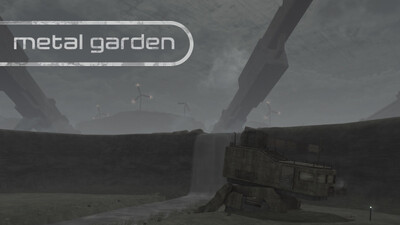
In a landscape saturated with bombastic, loud action titles often bloated with "deep" mechanics and padded run times, a game like Metal Garden (2025) feels like a rare treat. As Tinerasoft's debut title, it shines uniquely, and offers something I think a lot of long-time gamers will realize they've been missing for awhile. It markets itself as a short, atmospheric singleplayer FPS game, and delivers on those ideas delightfully well. Not only is Metal Garden rich in atmosphere, but its arena-shooter-style movement is fluid and responsive, its storyline is compelling, and the world it offers is conceptually novel and believable. Players take on the role of a nameless nomad as they wander through the interior of an unfathomably ancient megastructure in search of a way out, all while piecing together the stories of the various factions populating it.
The world offered by Metal Garden is bleak and monochromatic, appropriately so, given the premise of the game. Players are thrust into the world unapologetically, and find themselves staring at the remnants of their broken mech upon first launching the game, set against a greyscale backdrop of a waterfall, a ridgeline, and the enormous paneled ceiling so high above it often becomes obfuscated by storm clouds. It's quiet, with only the sounds of the water running close by and the distant rumbling of an oncoming storm. Though our mech is useless to us now, we mark its position with a beacon for other nomads, hinting at a much broader network of people than what we see in the game actively. And this is something Metal Garden does exceptionally well: implication.
After resupplying, we leave our mech behind and emerge into an open plain surrounded by trees and tall grass. The megastructure as a setting is executed so perfectly here that even though we are surrounded by flora we associate with outdoor spaces, the skybox and distant structures climbing into the "sky" remind us that we are still within an interior space. The sense of scale is never lost in the game, even for a moment. The megastructure is always there in the background and its sheer vastness makes it feel almost like an entity in itself. Players are made to feel much less like an action FPS protagonist and more like an insect crawling around in the cadaver of a long dead god, with its long concrete roads mapping a connection from one point to the next, its vast chambers funneling into one another beneath the surface, and its impossibly large barriers keeping us sequestered within.
This constant execution of scale so consistently sells the vision of the developers and makes it impossible not to be conscious of the megastructure and the fact that we, and all the other people we encounter, are prisoners within its walls. The modest music of the game is used sparringly, applied mostly to more intensive combat situations. This choice is part of what allows the players to become so immersed in the other sound design of the game, which is often quiet. Contemplative. We feel the isolation surrounding us, we feel the silence of the abandoned wastes, and in that silence, we can sense the ghosts of the civilizations whose ruins we discover watching us.
This section will be relatively short as I feel atmosphere and environment go hand-in-hand. But it does warrant its own section enough for me to differentiate them. The game environments are, as mentioned, bleak and mostly monochromatic. The color of the game is grey, with everything washed in it enough to give it that rustic, worn out feeling. Visually, the game is distinct, but it has the environmental feel of a game series like S.T.A.L.K.E.R, especially where the brutalistic designs of the structures are concerned. It feels distinctively like Eastern European Brutalism at times, and looks the part. The trees? Greywashed. The grass? Greywashed. All of it suggests a sense of lived-in wear that sells the oppression of the megastructure itself; it affects everything within it.
My only real gripe about the game comes from this artistic direction. Though the game is short, players will explore a variety of different locales from open plains to the processing portions of mining facilities, which is excellent, but I feel some of the environments lose what makes them unique for the sake of the greyness. This feels intentional, especially given our character's position in the world as a mere wanderer, but there were a few times while playing that I felt some more visual distinction between areas would have been a nice touch, something to help the player recognize at-a-glance where one section ends and another begins.
The gameplay of Metal Garden is mostly movement. There are combat encounters, that feel great, but the majority of the time spent in the game is spent traversing the various areas and structures of the game. The physics-based movement system, again think Quake, was a fantastic choice for this title. Building momentum to leap across chasms and precariously scale the exterior of sub-structures feels incredible. Though my fingers aren't as nimble with this system as they used to be, I didn't really have issues navigating and utilizing the full breadth of the movement mechanics to progress the game.
Speaking of progression, this isn't a game with conveniently spilled/splashed paint to tell the player where to go. It doesn't need it. The platforming sections are structured perfectly, with everything feeling very intuitive. The platforming puzzles are easily solved, provided players don't overthink them, which I found myself prone to doing with nearly all of them. That's not to say they're too simple by any means, but rather they feel exceptionally practical, something a lot of bigger titles in this genre would benefit taking notes from.
Though the combat and gunplay of the game are simple, the movement mechanics allow it to feel fantastic once adapted. It is very possible to play this game without taking a single point of damage from enemies, as all their attacks and bullets are well telegraphed and mapped, making them relatively easy to dodge. Enemies have access to the same abilities to jump and interact with the environments as the player does, and their AI does take advantage of this but never in a way that feels particularly hindering to the player. Even in close quarters, players can out-maneuver packs of enemies to dispose of them easily.
There are only two enemy types that players will encounter in the game. Each poses a different risk that encourages players to react differently, altering encounters based on how these enemies work together in packs. One specializes in slow but hard-hitting melee attacks that will force players to stay light on their feet or risk death, while the other type wields a variety of ranged weapons that each require a slightly different approach to counter. There was never a point where, despite being vastly outnumbered, I felt like the enemies had caught me helpless. Our nomad may be a person of few words, but they're apt in a fight.
There's only one real boss encounter in the game with the staple 'big dramatic health bar' and some more intense music. It's a good one, and it rewards the players--much like the rest of the game--for thinking outside of the box.
One last point for this section is the health management system of the game. Like some older titles, there's a limb-management and injury system in the game. Taking repeated damage to one of your limbs will result in permanent damage to it that alters your gameplay. I got knocked in the head a few too many times, as an example, and my crosshair when firing from the hip disappeared because my character could no longer visualize where they were aiming effectively. Shortly after that, I was dealing with a shoulder injury that made my aim unreliable. I like this system a lot. Players can cure their limb injuries by visiting auto-surgery stations found typically at the start and end of each chapter, so the system doesn't become too oppressive in a way that makes taking any damage feel devastating. Outside of these auto-surgery stations, health packs can be found within the environment to keep health topped off, but keep in mind, even if your health is consistently high, you can still develop injuries in different limbs depending on how often that particular limb takes damage in a fight.
This is a narrative game. It markets itself as such, and it should be judged heavily based upon those claims. That being said, I don't want to spoil the actual story of the game because I enjoyed it greatly, and recommend experiencing it for yourself. Players aren't given the story through cutscenes or infodumps, but rather are left to discover pieces of it through environmental storytelling and some data logs. And even though the game does rely on the data logs to deliver the story, it hasn't been done in a way that feels like "telling" rather than showing. The information that we find is relevant directly to the setting we find it in, and we can see how the area used to operate before it was abandoned.
Through the game, despite its short runtime, we are given pieces of a puzzle and expected to put them together to give us a bigger picture. What happened here? Where are we? What's the point of all of this? And it is very rewarding to form that picture by the time the credits roll, especially after the big reveal at the end of the game. Seriously, the story of the megastructure is a good one. Go play the game.
Metal Garden is a great game. You can knock it out in one sitting, the developers themselves even claiming it can be completed in as little as an hour, though if you're like me and want to see everything, it can take between three and four hours. It's worth the time investment because it's such a refreshing title, especially for the FPS genre. The world and atmosphere of the game are top-notch, as is the story the game presents, and beyond just how it chooses to tell its story, it trusts the intelligence of the player to put the pieces together. That is wildly refreshing in today's media climate. I give this one an 8.7/10. Seriously, go pick it up on Steam for $5 and give it a try, you won't regret it. I look forward to seeing what Tinerasoft releases next.

Still Wakes the Deep (2024) released to a great deal of hype back in 2024, and I would say immediately that it deserves the praise. As a psychological horror game, it delivers on the most crucial elements of the genre: atmosphere, tension, and narrative. An important distinction to make early is that the game never really marketed itself as a 'survival horror' title, and it shouldn't be judged based on the expectations of that particular genre. It isn't built to be a survival game where players can fight against the monstrous forces at work, and instead leans heavily on the trope of a protagonist who is outmatched physically by his adversaries, and must rely on his wit and stealth to survive.
Though I've never been on an offshore oil rig on Earth, I found myself completely immersed in the setting the game presents. The Chinese Room certainly did their research, and it shows in the staging and set pieces of the game. The Beira feels vast and utilitarian, with its many levels and layers designed to be easy to navigate once you're familiar with them, allowing players who lack a reliable internal sense of navigation (myself included, at times) to orient themselves and find their way from one objective to the next. After the inciting incident of the story, the Beira gradually deteriorates, and the once-familiar passages and catwalks suddenly warp into impassable channels, fiery ruin, or become overgrown with the cosmic flesh mass that is slowly consuming the entire rig. This [d]evolving environment complements the decay of reality within the world and narrative exceptionally, especially as Caz, the player character, is slowly affected by the maddness of what's occuring around him.
But this oil rig isn't populated by Caz alone. There is a crew of several NPCs who occupy jobs on the Beira, and each one feels distinctly unique and alive. The voice work in this game cannot be praised enough. Voice acting is a crucial art within games, and one that can easily make or break my personal enjoyment and immersion within a world. Two of the voice actors for this game, Alec Newman (Caz) and Karen Dunbar (Finlay), won British Academy Games Awards for their performances. Caz and Finlay are not the only beautifully performed characters in the game. I found Rennick, Roy, and Brodie, also worthy of mention. Roy's gradual decline through the game was heart-wrenching to hear, and though I knew what to expect from the onset of the game (being a horror game junkie does this to you) I found the inevitable resolution of his character deeply emotional. Further, many tertiary characters who become adversaries for Caz post-mutation were performed in that sweet spot of "still human" but not quite "right." Trots and Muir, especially, gave me chills with the mournful sadness in some of their lines. I would also like to note here that I appreciate the fact the lines were written very true to character and dialect, this contributed greatly to my enjoyment and belief in these characters as real people.
The isolation that is felt throughout the game would not be nearly as effective without the vast expanses of the ocean surrounding the rig on all sides. In the introduction of the game, before the inciting incident, players are introduced to the rig and some of the crew, with the blue abyss omnipresent in nearly all of the scenes and interactions. The ocean is there, occupying its space, apathetic and unmerciful to all the souls on the rig. In a way, the ocean comes to feel like both an oppressor in the game and an equalizer, especially once we learn more of Caz's history before coming to the Beira. Though I am not personally frightened of the ocean, I can understand why that aspect of the setting is stress-inducing--especially once the storms kick up and the swells rock the rig and crash onto the deck.
I'll mention it here because it fits here better than anywhere else: Jason Graves absolutely killed the music for this game. Continously through my playthrough, I would stop and listen to the music. The music is modest and restrained appropriately, careful not to disturb the tension, but when it swells, it rises like a wave and it's utterly beautiful. I will be listening to this game's soundtrack regularly.
The presence of enemies in the game is introduced via the old tried and true horror game method of "hearing them before you see them" and in this case, in the winding labyrinth of the Beira, it's very effective. We see the fleshy growths starting to grow up around the rig, breaking through the hull, prying the metal shell apart, and creating leaks that will inevitably sink us even if we do survive the more physical threats. As stated before, there is no combat system or mechanics in the game, and instead Caz must rely on stealth and distraction to navigate around the freakish remnants of his crew mates in order to progress and survive. There are only a handful of close encounters with different enemies in the game, and many of them end in scripted chases. I found this disappointing. The linearity of the game is passable in some instances, especially with how much of a story intensive game this is, but after the second encounter, I had gone completely numb to the "threat" of the enemies.
The enemy design is decidedly grotesque. This game does body horror well. I also appreciate how the enemies who have dozens of tendril limbs to move around with actually use all of those limbs, which makes it challenging in some instances to figure out their pathing and where they will go next as you're attempting to sneak around them. It isn't as simple as observing them and moving when they're turned around, especially since most of the enemies have a reach, height, and huge speed advantage over the player character. Combine this with the fact that most of the enemies recognize Caz and will react accordingly, and you get a tasty treat of cosmic horror that most fans of the genre will enjoy.
This game is a narrative heavy game. It should be played as an interactive story, more than a standard horror game. The developers themselves have stated this as being their intention with the title, and they achieved this. While the story isn't exactly the most groundbreaking, it doesn't need to be. Good stories don't have to rely on wholly novel concepts or ideas, but rather a combination of factors: strong characters, good pacing, concrete worldbuilding, and structure. Each of these four ingredients is present in Still Wakes the Deep consistently. If you like good stories, play this game. The story is grounded in a realism that anchors Caz in the world in a way that, even if we don't agree with his choices, we understand them and still want him to succeed. Everything we set out to accomplish as the player has some narrative purpose, whether it's restoring power so we can use the radios to call for a support ship and rescue, or shifting the weight of the legs to stop the rig from listing, there is a reason we are facing the horrors and treacherous conditions on the rig.
From the jump, players are introduced to the tense world the game has to offer via Caz's internal turmoil. We learn he has a wife and two daughters at home, and tension with his wife is threatening to break the family apart. This is Caz's fault. Caz, we learn, is a bit of a fighter, and got into a bar fight with a man back home, and that man is pressing criminal charges against him. In an effort to avoid prosecution, Caz has joined the crew of the Beira to "let things cool off", something Susan (his wife) thinks is cowardly and will only bring the family more pain. But Caz goes anyway, leaving his life onshore behind for the Beira. We learn from the environment that the Beira isn't exactly operating to the highest safety standards, to the point that the crew has unionized. Rennick, the rig operations manager, runs the vessel like a war general, and he's yoked by his obligations to the corporation who owns the operation to see profits come through--no matter what. So when the police call after Caz, he's rightfully pissed, and fires Caz on the spot. Caz is not a perfect, squeaky-clean action protagonist. He is a flawed, troubled man who is trying to do what he thinks is best for his family, no matter the cost.
On our way to get fired, we discover the actual drill itself has problems. It's a bit of not-so-subtle foreshadowing that is cashed out almost immediately. In Rennick's office, the drill operations call him, telling him that whatever they're hitting "doesn't feel right" and he insists they carry on anyway. After being fired, Caz leaves Rennick's office, and climbs up to the helipad, where a tremor and explosion rock the entire rig, throwing one crew mate off the side of the deck. In an effort to save him, Caz is thrown overboard too, but is rescued by other crew members. Post rescue is where the game really begins. After awakening alone, Caz sets out to find out what happened and to figure out what's going on.
I wanted to save the discussion of Roy's character for this section of my review in particular because Roy as a physical presence is very minor, but he serves such a tremendous narrative role. Roy's relationship as Caz's best friend--and the reason he even got the job on the Beira--is crucial to understanding Caz. Roy is a religious man and his love and faith towards Caz is really the only source of light Caz has presently. He constantly reminds Caz that God loves him, that Jesus forgives him, and that if he just faces the consequences of what he's done, things will work out. From the onset of the tragic tale of the Beira, Caz is determined to find a way to escape not just for himself but for Roy, too. This is the motivation throughout the first two acts of the game: find a way to escape with Roy. However, at the top of the third act, Roy's diabetes has taken its toll, and rather than perish to the horrors consuming the rig, he falls into a diabetic coma, and dies. Though this moment was predictable, it was still very sad. And I appreciate the tonal shift we see in Caz in the wake of his best friend's death.
This is a cosmic horror story. I think that's important to reiterate, especially given the discourse I've seen regarding the ending of the story. Cosmic horror stories really can only end one way. Nobody can survive them. It's a sense of hopelessness and helplessness on a scale that is beyond our understanding, induced by a force that we cannot understand or reason with. Though we might resist it, eventually, it consumes us anyway. Like Finlay said, even if she and Caz made it off the Beira, they wouldn't really escape what had happened. I liked the ending of the story. I think Caz finally accepting what he has to do, even if it costs him everything, was deeply appropriate. Even more fitting that the final gameplay prompt we are confronted with as players is "Let go." The story was paced just enough that I felt it wasn't overstaying its welcome or dragged out, it was a solid length and all in all, the greatest offering this game has for players.
If the story is the high point of the game, the gameplay is unfortunately the lowest. The Chinese Room as a development studio is a bit infamous for their frequent creation of "walking simulators" and I felt like this title was really no different. And that is unfortunate because I wanted more from the gameplay of this game. At its best it was tedious, and at its worst, it was so repetitive and padded that I was tempted to close the game and do something else. Out of all the gameplay aspects, the platforming was definitely the best, and the worst probably the stealth mechanics. Which is a bummer, given how reliant the game is on those mechanics when dealing with enemies. For me, a lot of the frustration of these mechanics came with the simple fact there is no 'toggle' option for crouching when playing on mouse and keyboard. Two of my six total deaths were caused by my finger twitching on the key I had been holding down for 5 minutes straight and Caz inexplicably standing up and being spotted.
The game itself is straight-forward and efficient with both its control scheme and its gameplay, and primarily players will find themselves pushing one or two buttons consistently, even in high stress situations, to ensure Caz lives to flee another day. I greatly enjoyed this aspect of the game, because I've grown frustrated with the contemporary trend in horror games to inflate tension and stress levels by requiring laborious inputs to survive. Player frustration does not make for an enjoyable gaming experience, and if your title requires artificial injections of stress to increase tension effectively, I believe something greater needs correction.
The setting of the game, being grounded in realism, doesn't allowed for complicated mechanics and this game definitely does not need them. I think often "deep gameplay" is a buzz word for bloat (Silent Hill f I am looking directly at you), but in this instance I think even having a bit more player agency and choice would have improved the engagement and gameplay of the game. Allowing the player to choose to go fetch Roy's insulin first, deciding when to flood the pontoons to save Brodie, etc. would have made for something that felt a little bit more full, even in this interactive story.
The puzzles were all very simple and straightforward, most I didn't even realize were puzzles until after solving them. You don't need a guide up to play this game comfortably.
Still Wakes the Deep is a solid game, offering a fantastic cosmic horror story with a unique setting, lovable cast of characters, and a haunting musical score. Though the gameplay leaves a lot to be desired, it's worth playing just for the story and the immersive experience. I give it a solid 6.8/10.